Snetor STYRENICS
الفئةProducts
الفئة الفرعيةPolystyrene (PS)
Styrenics, derived from styrene, include polymers such as acrylonitrile-butadiene-styrene (ABS). They are used for their rigidity, lightness and ease of moulding, in applications ranging from food packaging to electronic components and toys. Properties & Characteristics Excellent surface finish It produces smooth, glossy finished surfaces, often used for applications requiring good aesthetic appearance. ABS can be easily coloured, either in the mass before moulding, or afterwards via painting or coating processes, offering great aesthetic flexibility. Good rigidity Impact resistance: ABS is particularly appreciated for its ability to absorb impact without cracking or breaking, thanks to the butadiene elastomer phase that gives it this robustness. Rigidity and strength: ABS has good rigidity and resistance to mechanical stress, making products made from it durable and strong. Easy to mould and process Excellent fluidity: ABS has good injection-moulding properties and can easily be transformed into complex objects with fine details. Low processing temperature: It can be moulded at relatively low temperatures compared with other polymers, reducing energy costs and the risk of thermal degradation. Applications Industrial applications Mechanical parts, housings and casings, brackets and fixings E&E housings and shells, household appliances, connectors, etc. Medical Medical furniture, disposable devices, etc. Consumer products Toys, sports equipment, leisure equipment Automotive Interior components (dashboards, handles, etc.), exterior bodywork (bumpers, mirror housings, etc.), technical components, etc.
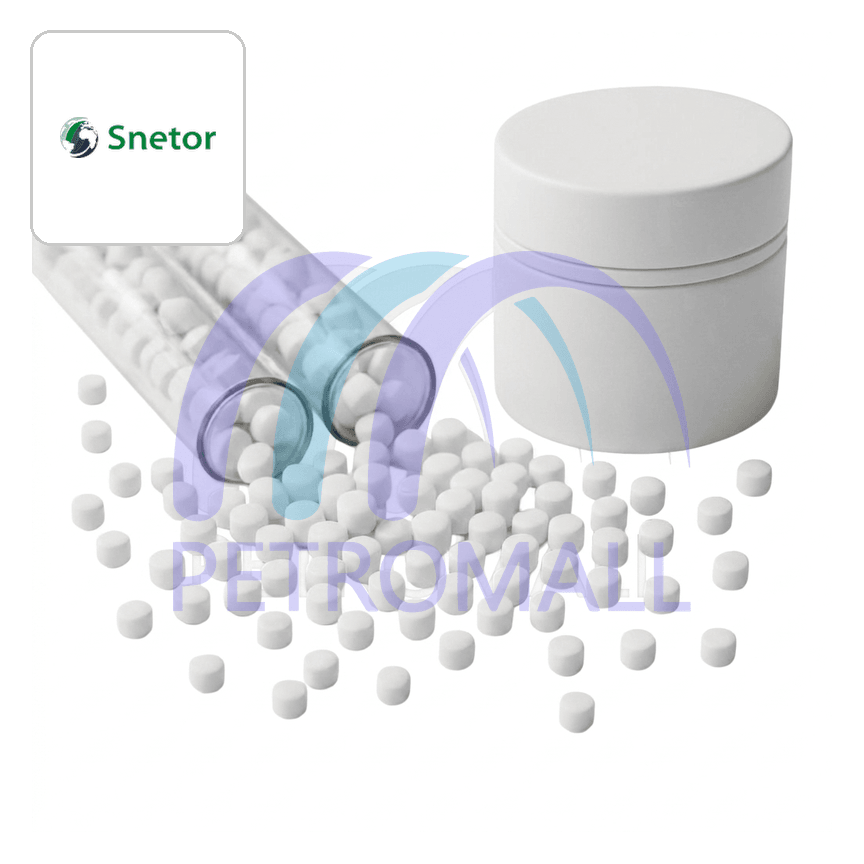
Shape: Pellets
مناسب لتطبيقات الحقن البلاستيكي والتشكيل، مثل الحاويات الصلبة والأغطية والقطع الهندسية التي تتطلب صلابة عالية وثبات الأبعاد.
التوفر
فلسطين
الأردن
تركيا